Research
Submission RequirementsResearch That Changes Lives
At Abilities Centre, research is not a separate function. It is woven into everything we do.
Our in-house research department gives us a unique and ongoing opportunity to understand the real impact of our programs and services, and to continuously improve the support we provide to individuals, families, and communities across Durham Region and beyond. From evaluating the effectiveness of our programming to exploring new methodologies and contributing to the broader academic conversation on accessibility and inclusion, research helps us make better decisions, tell truer stories, and unlock more potential.
We also work alongside university and community research partners to conduct novel research in the field of accessibility and inclusion, support community-based knowledge translation, and amplify the expertise of individuals with lived experience of disability. Abilities Centre is committed to advancing research that creates a better, more barrier-free life for all Canadians.
Interested in Collaborating With Us?

Abilities Centre supports a range of research collaborations aligned with our mission, programs, and community. Depending on the nature of your proposed project, collaboration may involve full partnership in study design and implementation, support through participant recruitment and site access, or ethics review through the Joint Research Ethics Board (JREB).
We welcome researchers who are working on questions related to accessibility, inclusion, disability, physical literacy, health, and well-being, and we encourage you to get in touch early so we can help identify the right pathway for your project.
Meet the Team
Joint Research Ethics Board (JREB)
The Joint Research Ethics Board at Abilities Centre supports ethical review of research involving human participants across three partner organizations in Ontario.
The Joint Research Ethics Board (JREB) supports the ethical review of research involving human participants at Abilities Centre, Ontario Shores Centre for Mental Health Sciences, and Grandview Kids, as well as selected external research projects.
The JREB helps ensure that research is designed and conducted in a way that protects participants, supports their welfare, and reflects recognized ethical standards and applicable institutional requirements. Review activities are guided by the principles of respect for persons, concern for welfare, and justice, as outlined in the Tri-Council Policy Statement: Ethical Conduct for Research Involving Humans (TCPS 2).
Researchers interested in conducting work with one or more of our partner organizations, or seeking JREB review for an external project, are encouraged to review our submission information and collaboration pathways before applying.
Standard Operating Procedures
Items
- Principles & Guidelines
- Terms, Definitions, & Acronyms
- Composition
- Members Duties
- Membership Management
- Training & Education
- Qualifications & Duties
- Research Requiring REB Review
- Submission of a new Research Ethics Application
- Delegated Review
- Full Board Review
- REB Review Decisions
- Amendments Review
- Continuing Annual Review
- Reportable Events
- Suspension or Termination of REB Approval
- Research Completion
- Signatory Authority
- REB Communication
- Meeting Administration
Items
Principle investigators Responsibilities
The Principal Investigator (PI) is responsible for the implementation of the research study, its scientific and ethical conduct and the protection of each research participant.
The PI must conduct the research study in compliance with the Tri-Council Policy Statement; relevant regulations (i.e., ICH Good Clinical Practice: Consolidated Guidelines; Division 5, Canadian Food and Drug Regulations; Ontario Personal Health Information Protection Act admits applicable Regulations) and all other applicable laws and regulations of Ontario.
The PI must ensure that the Research Team (all co-investigators, researchers and other personnel) involved in the research study are qualified and experienced to conduct the study. The PI must also ensure that the Research Team adheres to the protocol and consent form(s) as approved by the Joint Research Ethics Board (JREB).
All JREB review materials (JREB application(s), correspondence with the JREB, approved consent(s), and JREB approval letter) must be reviewed by the PI. Responses to the JREB review letter must be signed off by the PI to confirm their review and agreement with the response.
Clinical Trials
For details on “clinical studies” as defined by Health Canada (i.e., involving an investigational drug or medical device), please refer to the link below for the Ontario Shores Research Ethics Board website.
External Principal Investigator
For studies originating from outside of Abilities Centre or Ontario Shores, a qualified staff member from Abilities Centre or Ontario Shores must be involved as the institutional liaison (local Principal or Co- Investigator), who will accept complete responsibility for the research activities at the institution. The institutional liaison for research taking place at Abilities Centre site will be a qualified Abilities Centre staff. The institutional liaison will also serve as the administrative contact with the JREB. The role of institutional liaison applies only for studies where the PI initiating the study is not a staff member and external to Abilities Centre.
JREB Membership
The JREB brings together members with varied expertise, lived experience, and organizational and community perspectives to support thoughtful and balanced ethics review. This multidisciplinary approach helps ensure that research is evaluated not only for scientific and procedural quality, but also for participant welfare, accessibility, and context.
In keeping with applicable ethics guidance and institutional requirements, the Board includes members with experience in research ethics and relevant subject matter areas, as well as community representation. Membership is reviewed and updated periodically.
2026 JREB Membership
| Name | Role |
| Shilpa Dogra | Chair, Scientific, Affiliated |
| Gayathiri Rajkumar | Secretariat |
| Akosua Nwafor | Ethics, Affiliated |
| Jennifer Van Meer | Privacy and Access, Affiliated |
| Taryn Eickmeier | Scientific, Affiliated |
| Shantel Mangroo | Scientific, Affiliated |
| Karen Chartier | Community, Non-Affiliated |
| Carolyn Wilson | Legal, Non-Affiliated |
| Nicholas Cheung | Pharm, Affiliated |
| Claire Hibbert | Scientific, Affiliated |
Types of collaboration
Information for researchers interested in collaborating with Abilities Centre or submitting to the Joint Research Ethics Board.
Interested in collaborating with us?
Abilities Centre welcomes research collaborations that align with our mission, our community, and our programs. Whether you are looking for a full research partner, site access and recruitment support, or external ethics review, we encourage you to reach out before submitting so we can help determine the most appropriate pathway for your project.
Principal Investigator requirements depend on the nature of the project and the role of Abilities Centre. Projects involving direct collaboration, site activity, participant recruitment, or local implementation require a local Principal Investigator to ensure institutional accountability and day-to-day oversight. Where Abilities Centre is involved as a participating site only, local responsibilities may differ from those of the overall study Principal Investigator. These expectations are reviewed during project planning and submission.
We encourage all researchers to contact the research team before submitting so we can help identify the appropriate pathway, required documentation, and any local considerations.
Types of collaboration
Full Research Collaboration
For projects that are closely aligned with Abilities Centre priorities and involve meaningful organizational partnership.
This may include:
- Study design and implementation
- Participant recruitment
- Use of Abilities Centre programs or settings
- Operational coordination
- Knowledge mobilization and dissemination support
Depending on the project, a local Principal Investigator or site lead at Abilities Centre may be required. Project roles and responsibilities are confirmed before submission.
Multi-Jurisdiction Research (MJR)
For projects involving more than one participating institution or site, where Abilities Centre is one of several participating locations and ethics approval has already been obtained.
These projects may require coordination across institutions, local site approvals, and clarification of local Principal Investigator responsibilities. Ethics and operational requirements may differ depending on the lead institution, study sponsor, and the role of each participating site.
Recruitment Only
For projects where Abilities Centre is not a full research partner but may assist with recruitment, study promotion, or limited operational support.
Examples may include:
- Circulating recruitment materials
- Allowing access to a relevant participant population
- Supporting limited on-site study activity
- Identifying a local contact for coordination
These projects may still require JREB review and organizational approval, even if Abilities Centre is not the study sponsor or lead research site.
External Ethics Review Only
Researchers who are not seeking active collaboration with Abilities Centre, Ontario Shores, or Grandview Kids may still be eligible to submit to the JREB for ethics review, depending on the nature of the study and the scope of the Board.
Types of Review and Submission Requirements
The Joint Research Ethics Board (JREB) adopts a proportionate approach to ethics review, meaning the level of review is based on the level of risk presented by the research. There are two review pathways for new studies:
- Full Board Review – Required for studies involving greater than minimal risk, such as clinical trials.
- Delegated Review (Expedited) – Intended for studies that present minimal risk.
For studies requiring Full Board Review, submissions must be received three weeks prior to the monthly JREB meeting, by the end of the business day. JREB meetings are held on the first Wednesday of each month from 1:00 p.m. to 4:00 p.m.
Studies eligible for Delegated Review may be submitted at any time. However, at the discretion of the JREB Chair, a study may be referred to the Full Board for review if necessary.
Please review the JREB Submission Process Flowchart and the Submission Checklist before preparing your application.
All submissions, regardless of review level, must be submitted through Submittable. If you have any questions or concerns, please contact inoor@abilitiescentre.org
Publications
Research publications from Abilities Centre and our academic and community partners, exploring accessibility, inclusion, disability, and health.
Abilities Centre collaborates with academic and community partners on research that advances accessibility, inclusion, health, participation, and well-being. Our publications reflect work across multiple program and service areas, including physical literacy, community participation, disability experiences, rehabilitation, and inclusive programming.
Browse selected publications by theme below.
- Sport and Physical Activity
- Physical Literacy
- Disability, Accessibility, and Inclusion
- COVID and National Disability Survey
National Disability Survey Reports
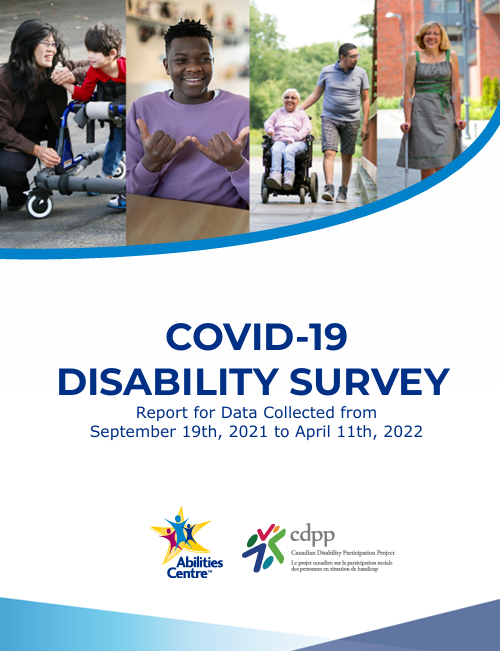
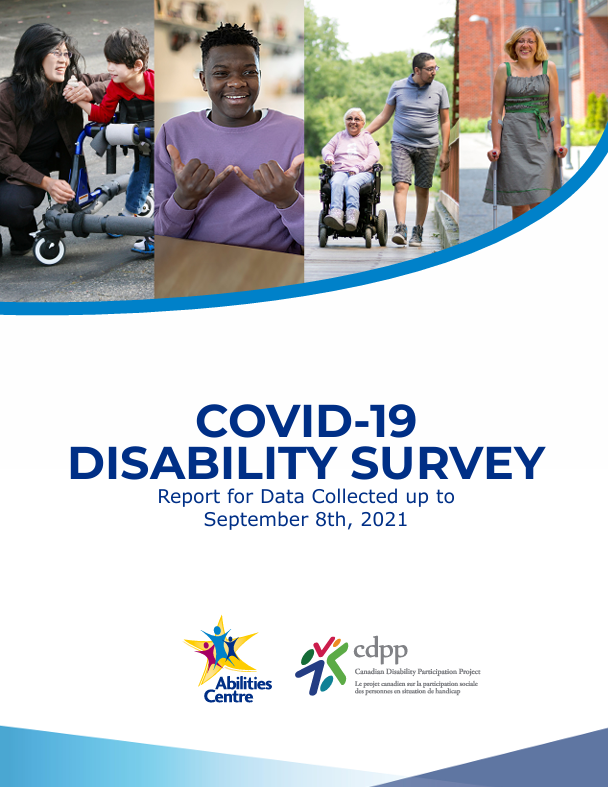
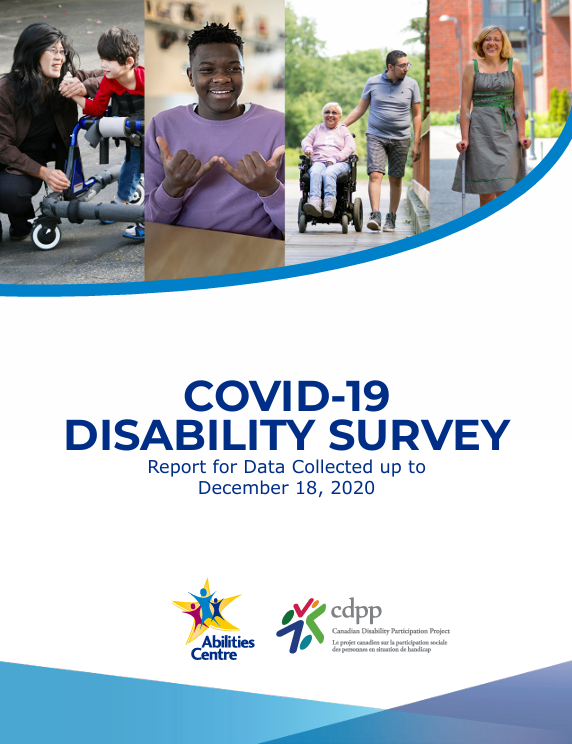
Abilities Centre is proud to partner and collaborate with many academic researchers to conduct novel research across Canada. Below we highlight one of our recent initiatives, the National Disability Survey, and our publications from the last 7 years. This research has been conducted in partnership with various academic research labs. We look forward to more collaborations in the future and new publications that advance the literature in accessibility and inclusion.
COVID-19 Disability Report (Sept 2021-April 2022)
COVID-19 Disability Report (Dec 2021-Sept 2022)
COVID-19 Disability Report (June 2020- Dec 2020)
Research Publications
Academic Journal Articles: